


Puerta del torniquete del gimnasio: ¿Qué tipo de puerta se adapta al formato de tu gimnasio?, Modelo de membresía, y tráfico en horas punta
2026-04-03


Para la mayoría de las entradas de gimnasios, La puerta derecha del torniquete del gimnasio se reduce a dos decisiones: Tipo de puerta y credencial. Las barreras de solapa son adecuadas para gimnasios comerciales grandes y premium, con 40–60 ppm por carril. Los torniquetes de trípode de alta resistencia son adecuados para gimnasios económicos y estudios de fitness más pequeños, con un precio de 25–35 ppm por carril.
Una puerta de torniquetes de gimnasio no es solo un producto de control de acceso, sino que es un sistema de protección de ingresos de la membresía. Cada no miembro que atraviesa una entrada de gimnasio sin control sin una credencial válida reduce el rendimiento de la base de miembros del centro. Fórmula de recuento de carriles en hora punta: El total de miembros de la clase se lanza ÷ ventana de 10 minutos ÷ PPM de puerta = carriles necesarios.
Esta guía ofrece a los propietarios de gimnasios, Gestores de instalaciones de fitness, y directores de operaciones de franquicia, una tabla comparativa de tipos de puertas con criterios específicos de gimnasio, Una sección de emparejamiento de escenarios tipo gimnasio, Planificación del rendimiento en horas punta, Opciones de credenciales de membresía, Resumen de la integración de software, y 24/7 Requisitos para gimnasios sin personal. Empieza con la gama completa de configuración de acceso fitness Ironman en elPágina del proveedor de torniquetes para entradas de gimnasio.
Tipos de puertas de torniquetes en gimnasios — Comparados según criterios específicos de cada gimnasio
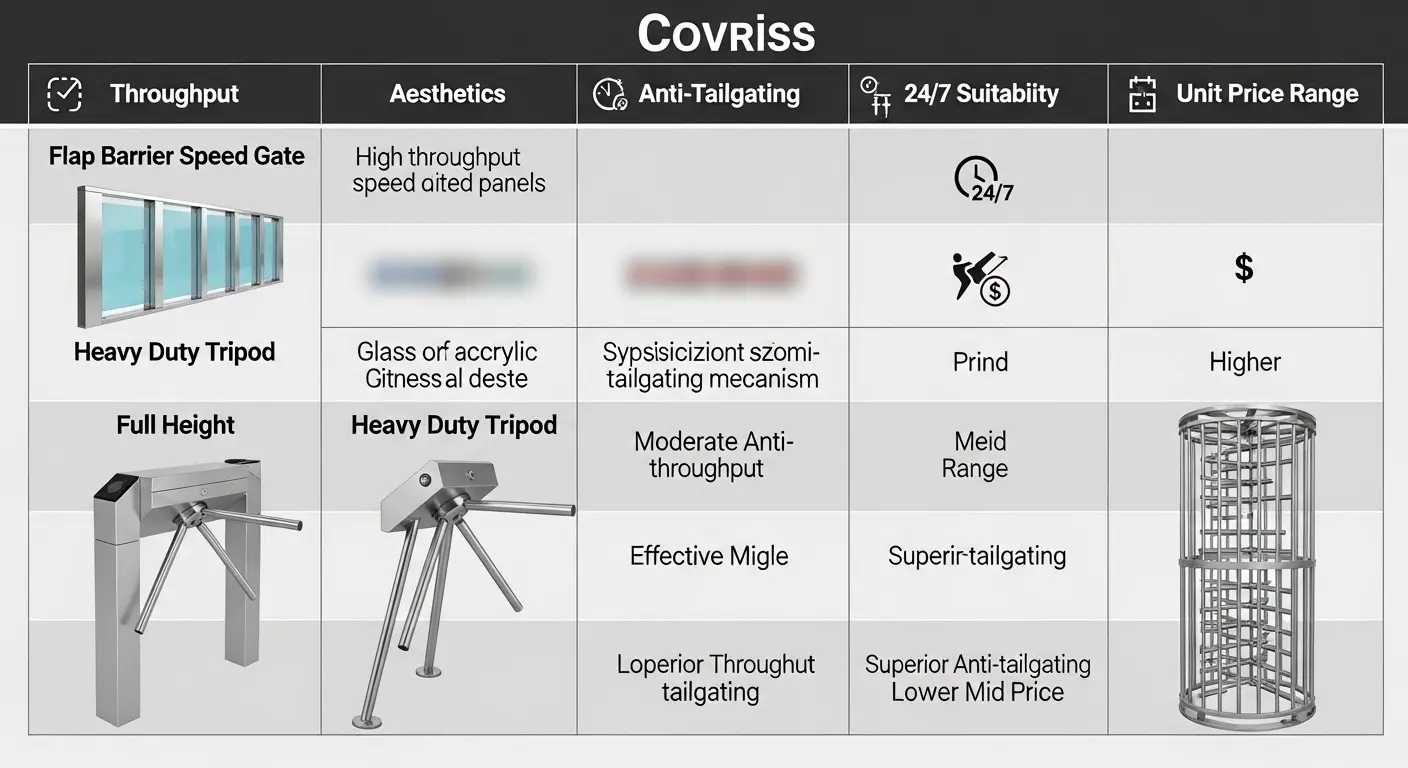
Cuatro tipos de puertas cubren los requisitos de entrada al gimnasio principal. Cada uno se adapta a un formato y presupuesto diferente. La siguiente tabla los compara según los criterios que importan para la especificación de un gimnasio.
| Tipo de puerta | Rendimiento | Estética | Anti-Tailgating | 24/7 Idoneidad | Mejor tipo de gimnasio | Alcance de la unidad |
|---|---|---|---|---|---|---|
| Barrera de solapas | 40–60 ppm | Alta — vidrio o acrílico | Sensor + alarma | Sí (+ Batería de respaldo) | Gimnasio premium, Cadena grande | $450–3.000 dólares |
| Puerta de Velocidad | 50–80 ppm | Más alto — columna de cristal | Sensor + alarma | Sí (+ Batería de respaldo) | Club de fitness de lujo | $1,300–8.000 dólares |
| Trípode de Alta Resistencia | 25–35 ppm | Funcional | Mecánica de uno por ciclo | Sí | Gimnasio económico, De tamaño medio | $200–1.400 dólares |
| Altura completa | 15–20 ppm | Industrial | Jaula física | Sí | Complejo deportivo al aire libre | $600–4.000 dólares |
Barrera de solapas y puerta de velocidad — Gimnasios comerciales premium y grandes
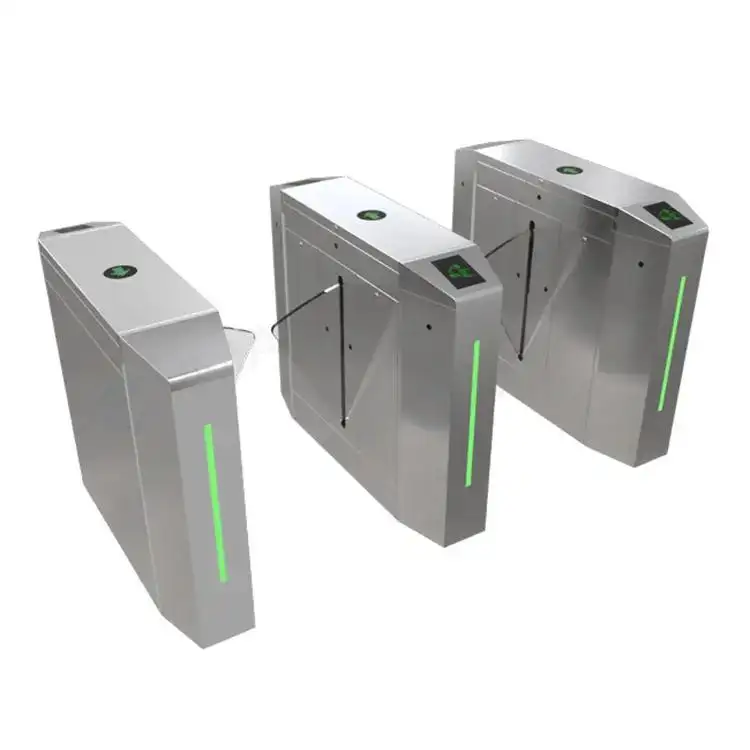
Las barreras de solapas son la puerta estándar de torniquetes de gimnasio para gimnasios premium y comerciales grandes. A 40–60 ppm por carril, Limpian la avalancha previa a clase sin ningún cuello de botella. El panel de solapas de cristal o acrílico presenta un aspecto moderno que coincide con el diseño de la mayoría de las marcas de fitness.
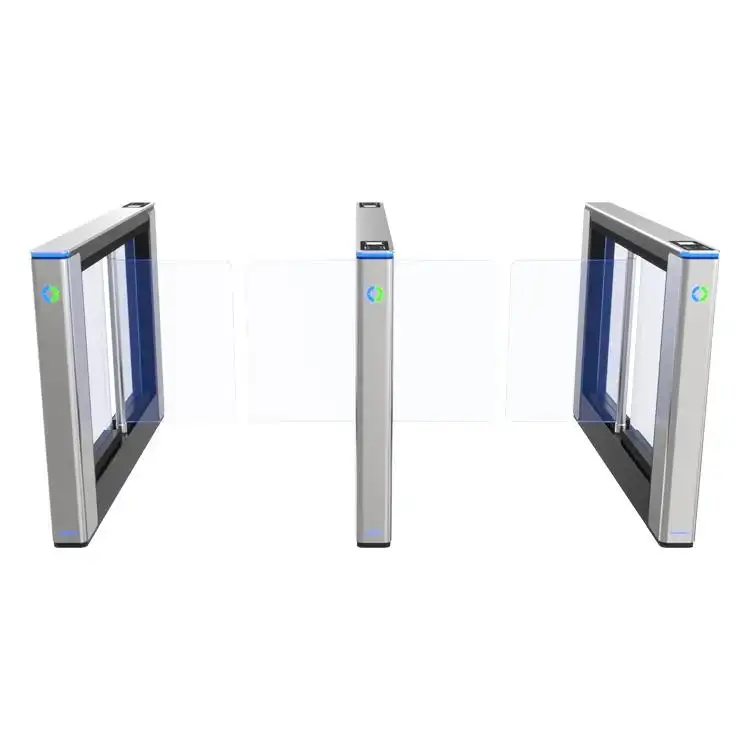
Puertas de velocidad a 50–80 ppm se adaptan a gimnasios de lujo y clubes de fitness de alta gama donde la puerta forma parte del entorno de la marca. A $1,300–$8,000 por carril, Representan el nivel premium de control de entrada a gimnasios.
Trípode y Altura Completa — Gimnasios y Complejos Deportivos Económicos
Los torniquetes de trípode de alta resistencia son adecuados para gimnasios económicos y instalaciones comerciales estándar a 200–1.400 dólares por carril. Ofrecen un sistema mecánico anti-tailgating, Compatibilidad directa con tarjetas de membresía RFID, y bajo mantenimiento continuo. Para el despliegue del gimnasio inteligente Ironman que usó esta configuración, véase elEstudio de caso de control de acceso inteligente en gimnasios.
Los torniquetes de altura completa pertenecen a los complejos deportivos al aire libre y a los perímetros de las instalaciones deportivas universitarias: su perfil industrial y menor rendimiento no son adecuados para la entrada principal de un gimnasio comercial cubierto.
Puerta de torniquetes del gimnasio por tipo de gimnasio — qué puerta pertenece a dónde
El tipo de puerta debe coincidir con el formato del gimnasio y el briefing de experiencia de los miembros, no solo el número de personas. La tabla siguiente ofrece una recomendación directa por tipo de gimnasio.
| Tipo de gimnasio | Puerta recomendada | Calles | Credencial | Requisito clave |
|---|---|---|---|---|
| Estudio boutique de fitness | Barrera de solapas | 1–2 | Tarjeta RFID o NFC móvil | Estética de la marca, Experiencia de los miembros |
| Gran gimnasio comercial | Barrera de solapas | 2–4 | Tarjeta RFID, Código QR | Rendimiento, Integración de software |
| Gimnasio de cadena económica | Trípode de alta resistencia | 2–4 | Tarjeta RFID | Bajo coste, fidedigno, Anti-tailgating mecánico |
| 24/7 Gimnasio sin personal | Barrera de solapa o trípode | 1–3 | Tarjeta RFID, Aplicación móvil | Sistemas de seguridad, Batería de respaldo, Monitorización remota |
| Complejo deportivo | Altura total + Barrera de solapas | 2–6 | RFID, biométrico | Multizona, Durabilidad en exteriores |
Estudios boutique y grandes gimnasios comerciales
Los estudios boutique de fitness necesitan una puerta de torniquetes de gimnasio que se adapte al entorno de la marca. Una barrera de solapas de cristal en la entrada del estudio refuerza la posición premium de la instalación. Basado en nuestra experiencia en despliegue en gimnasios, Los estudios boutique que especificaban un trípode sobre una barrera de solapas recibieron comentarios de los miembros sobre la experiencia de entrada en la primera 30 Días de funcionamiento — La diferencia visual entre un panel de cristal limpio y un brazo mecánico es notable en un espacio sensible a la marca.
Los gimnasios comerciales grandes necesitan por encima de todo el rendimiento en horas punta. Antes del trabajo (06:00–08:00) y después del trabajo (17:00–19:30) Las ventanas empujan entre 40 y 80 miembros a través de la entrada 10 minutos en un gimnasio típico de 500–800 miembros. Dos carriles barrera de solapas en 50 ppm por cada mango 100 Entradas por minuto — suficiente para la mayoría de las cargas punta de gimnasios comerciales.
Gimnasios económicos y 24/7 Instalaciones sin personal
Los gimnasios de cadena económica especifican torniquetes de trípode de alta resistencia por su combinación de bajo coste por carril, Anti-tailgating mecánico, y compatibilidad RFID. Los trípodes requieren menos mantenimiento continuo que las barreras de solapas. Además, funcionan de forma fiable sin batería de respaldo en la mayoría de los puestos de gimnasio interiores.
24/7 Los gimnasios sin personal tienen el requisito más alto para un funcionamiento automatizado fiable de las puertas. No hay personal para anular manualmente una falla de puerta en 03:00. Para la 24/7 Requisitos de especificación para gimnasios sin personal, véase la sección dedicada más abajo. Para Ironman's 24/7 Configuraciones de las puertas de gimnasio, Visita elPágina del proveedor de torniquetes para entradas de gimnasio.
Puerta de torniquetes del gimnasio y protección de ingresos de membresía
El principal caso de negocio de la puerta de torniquetes de gimnasio es la protección de ingresos por membresía — no el control de acceso en el sentido genérico. Cada no miembro que entra en un gimnasio sin pagar directamente reduce la rentabilidad de la base de miembros del centro.
Tres puntos de fuga de ingresos que cierra una puerta de gimnasio
Tailgating de free-rider: Un no miembro sigue a un miembro que paga por la entrada mientras valida su credencial. Una puerta de gimnasio con anti-tailgating basada en sensores detecta un segundo cuerpo antes de que la puerta se reinicie y active una alarma. Esto cierra la brecha a nivel de hardware, sin supervisión del personal.
Credenciales de membresía compartida: Dos personas usan una tarjeta de socio en turnos alternos. Una credencial biométrica (Reconocimiento de huellas dactilares o facial) En el torniquete del gimnasio vincula el evento de inscripción a una identidad verificada. La tarjeta no puede compartirse porque la identidad se confirma en la puerta.
Lagunas de acceso fuera de hora punta sin personal: En gimnasios con personal, Los turnos de madrugada temprano y de noche son cuando la entrada de los usuarios gratuitos es más alta: la atención del personal está dividida. Una puerta de torniquetes funciona con el mismo estándar anti-tailgating en 06:00 como ocurre en 18:00, sin presencia de personal en la posición de puerta.
La brecha de registro con personal
Basado en nuestro análisis de despliegue de control de acceso en gimnasios, gimnasios que pasaron del check-in manual en recepción a una puerta de torniquetes con integración de software de membresía lograda 100% Cobertura de validación de credenciales en todos los eventos de inscripción. Un check-in en recepción con personal suele lograr una validación entre un 60 y un 75% durante los periodos punta, cuando el personal gestiona tareas simultáneas junto con el check-in de los huéspedes. Una compuerta de torniquetes cierra automáticamente esa brecha de validación del 25–40%.
Planificación de la capacidad en hora punta para las puertas de torniquetes de gimnasio
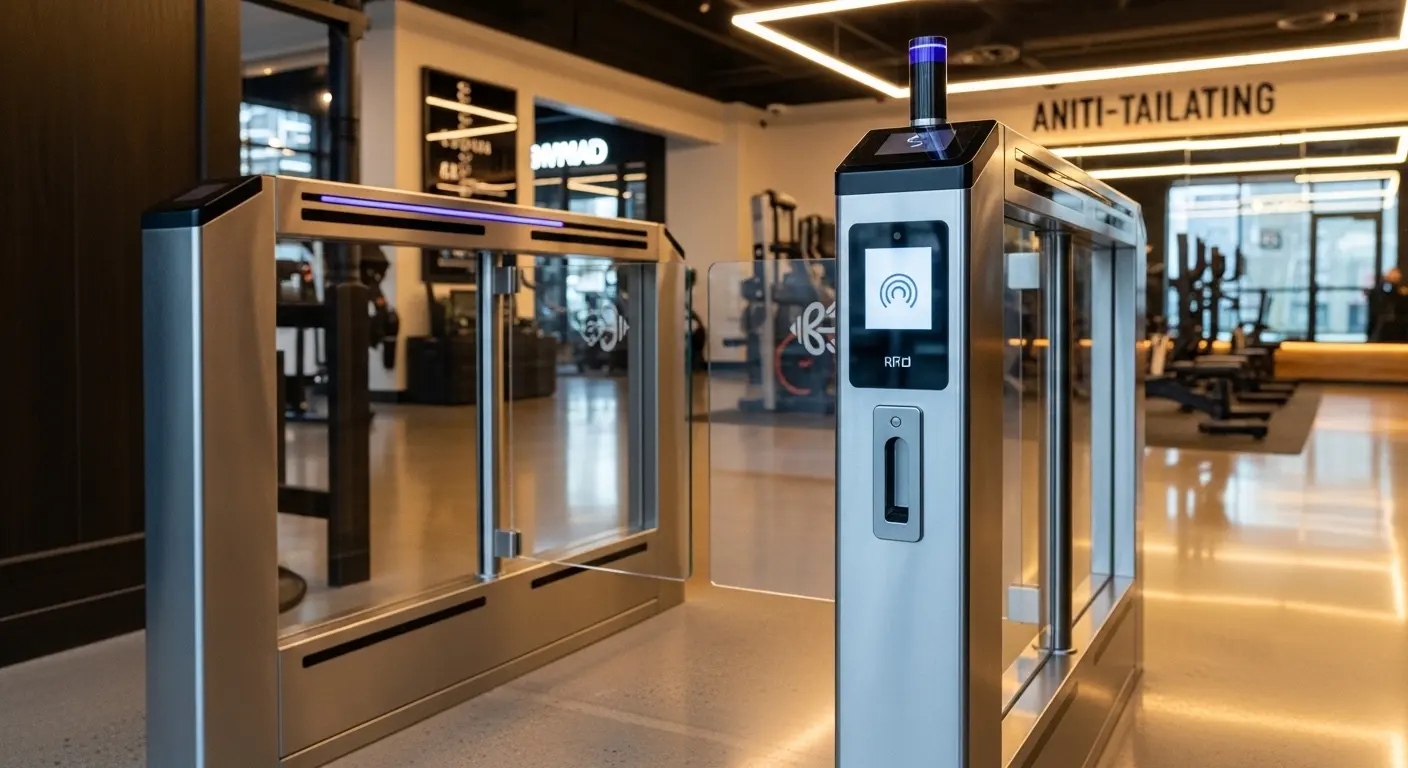
Especificar poco el número de carriles crea el principal punto de fallo operativo en horas punta: una cola en la entrada del gimnasio durante la hora punta previa a clase es un fallo directo de experiencia de los miembros.
Fórmula de recuento de carriles en horas punta:
Carriles = Total de miembros en la clase se apresuran ÷ ventana de 10 minutos ÷ ppm de puerta
Ejemplo 1 — Rush de clases de estudio boutique, 30 Miembros, 10-Ventana de minutos, barrera de solapas en 50 ppm:
30 ÷ 10 = 3 Entradas/minuto. 3 ÷ 50 = 0.06 carriles →1 Carril barrera de solapas es suficiente.
Ejemplo 2 — Gran gimnasio pico abierto, 150 Miembros, 15-Ventana de minutos, barrera de solapas en 50 ppm:
150 ÷ 15 = 10 Entradas/minuto. 10 ÷ 50 = 0.2 carriles →1 Carril con un repuesto por redundancia.
| Tamaño del gimnasio | Miembros de Peak | Ventana | Tipo de puerta | Calles |
|---|---|---|---|---|
| Tienda (80 Miembros) | 30 | 10 min | Barrera de solapas | 1 |
| Gimnasio de tamaño medio (400 Miembros) | 80 | 15 min | Barrera de solapas | 1–2 |
| Gimnasio grande (800 Miembros) | 150 | 15 min | Barrera de solapas | 2 |
| Cadena de presupuesto (1,000 Miembros) | 120 | 10 min | Trípode | 2 |
| Complejo deportivo | 200 | 15 min | Puerta de velocidad | 2–3 |
Basado en nuestro análisis de despliegue en gimnasios, La mayoría de los operadores sobreestiman su carga máxima. Confirma la tasa real de acceso a los picos a partir de los registros de inicio de sesión en recepción antes de especificar el recuento de carriles. Una clase de 25 Miembros llegando 10 Minutos requieren mucha menos capacidad de carriles que un pico nocturno de gimnasio abierto general.
Credenciales de membresía e integración de software para puertas de torniquetes de gimnasio
La elección de credenciales y la integración del software de membresía deben confirmarse en el momento del pedido, no como una reforma posterior a la instalación. Cada tipo de credencial tiene un perfil de riesgo anti-tailgating diferente y un protocolo de integración distinto.
| Tipo de credencial | Mejor tipo de gimnasio | Riesgo contra el seguimiento de la pista | Protocolo de integración |
|---|---|---|---|
| Tarjeta de socio RFID | Todos los tipos de gimnasio — estándar | Medio (compartible) | Wiegand 26/34 bits |
| Código QR (móvil o impreso) | Gimnasio grande, Cadena de franquicias | Bajo (QR de un solo uso) | TCP/IP / REST API |
| NFC móvil | Gimnasio premium, Basado en aplicaciones | Bajo (El teléfono es personal) | TCP/IP / Bluetooth |
| Biométrico (Huellas, cara) | 24/7 gimnasio, Gimnasio premium | Cero (Vinculado a la identidad) | Wiegand o TCP/IP |
Para el despliegue de la puerta de velocidad en columna con integración de software de membresía personalizada usado en un gimnasio premium, véase elEstudio de caso de torniquetes de la puerta de velocidad en columna. Para una configuración de puerta de velocidad totalmente personalizada en el gimnasio, véase elEstudio de caso personalizado de Speed Gate.
La mayoría de las principales plataformas de gestión de gimnasios (ABC Fitness, Cuerpo mental, Gympass/Wellhub, Gladiador) integrarse con una puerta de torniquetes de gimnasio a través de la API REST TCP/IP para acreditaciones QR/NFC, o mediante salida Wiegand para credenciales de tarjeta RFID. Confirma el protocolo de integración de tu plataforma con el proveedor de la puerta antes de hacer un pedido.
24/7 Requisitos para la puerta de torniquetes de gimnasio sin personal
Una puerta de torniquetes de gimnasio para un 24/7 El gimnasio sin personal debe funcionar sin ninguna intervención del personal durante todo el ciclo de 24 horas. Las especificaciones estándar de puertas de gimnasio con personal no son suficientes para un lugar sin personal.
Cinco requisitos específicos para 24/7 Puertas de gimnasio sin personal
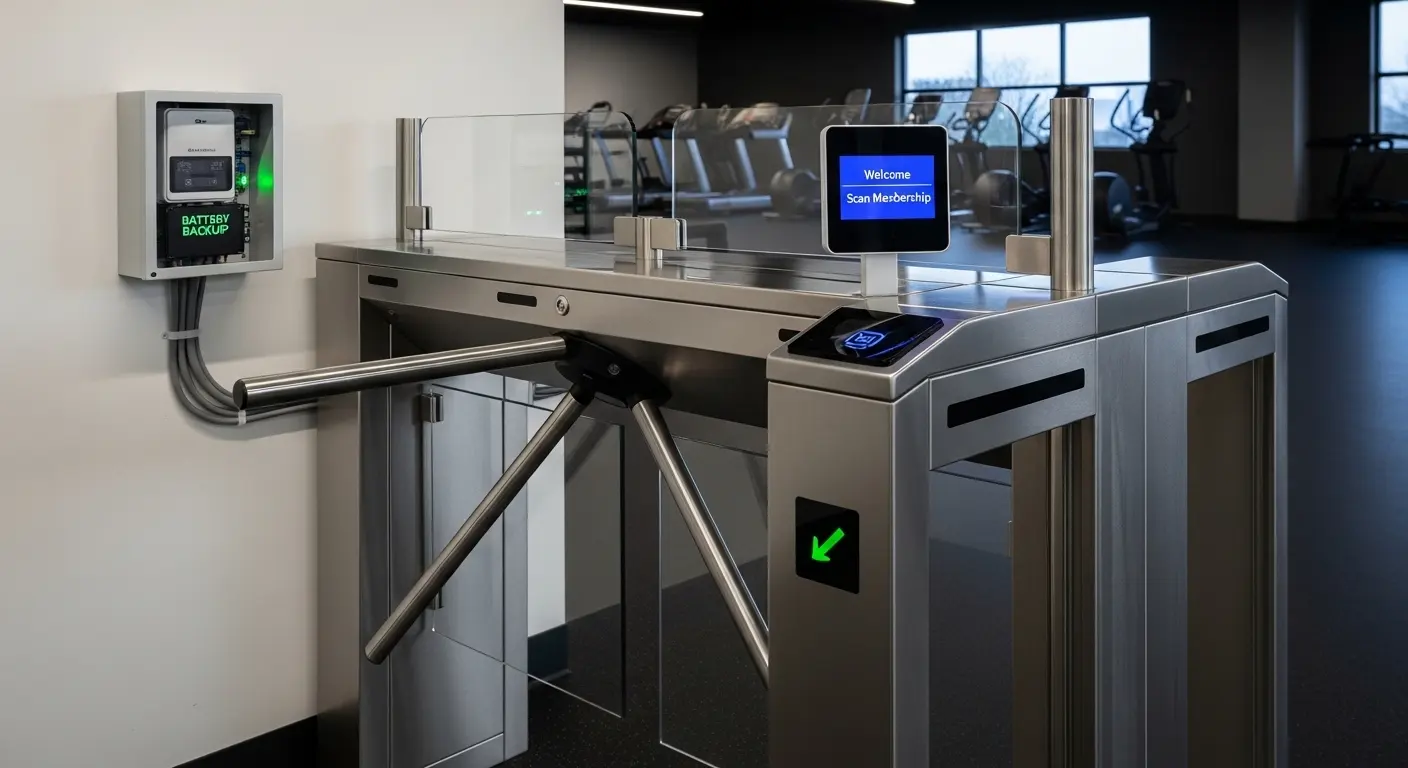
Apertura de seguridad al apagarse o alarma de incendios: La puerta se retrae y permanece abierta en la ruta de salida durante cualquier evento de emergencia. Según la NFPA 101 Código de Seguridad Vital, La barrera no debe bloquear a una persona dentro durante una emergencia. Nunca especifiques una puerta segura con cerradura y cerrada para un gimnasio no atendido.
Respaldo de batería (4–8 horas): Un UPS de batería de respaldo mantiene el funcionamiento de la puerta y la función de alarma durante un corte de suministro eléctrico. Esto es una línea de especificación — no es una característica predeterminada en todos los modelos de compuertas. Confírmalo en el punto de orden.
Monitorización remota vía TCP/IP o GSM: El controlador de la puerta se conecta a la plataforma de monitorización del gimnasio. ¿Cualquier alarma, Intento de entrada forzada, o el evento de energía activa una alerta inmediata al equipo de monitorización remota — la única supervisión disponible en un centro sin personal.
Armario antimanipulación: La vivienda de los armarios de la puerta debe resistir intentos de entrada forzada durante las horas sin personal. Especifica un armario de acero inoxidable reforzado con un sensor de detección de manipulaciones que se emite a la plataforma de monitorización.
Exportación de la pista de auditoría a la plataforma de membresía: Cada evento de entrada registra la marca de tiempo, Identidad de credencial, y la posición de puerta al sistema de gestión del gimnasio. Esta es la única pista de evidencia disponible para cualquier revisión posterior a un incidente en un lugar sin personal.
Obtener un presupuesto directo de fábrica para la puerta de tu torniquete de gimnasio
Cuatro artículos son suficientes para un presupuesto completo detallado directo a la fábrica dentro 12 Horario de atención.
- Define el tipo y formato de tu gimnasio: Taller de estudios / Gran gimnasio comercial / Cadena de presupuesto / 24/7 sin personal / Complejo deportivo + Recuento diario de socios y volumen pico de inscripciones
- Calcula tu recuento de carriles: Aplica la fórmula de hora punta — los miembros de la hora punta ÷ ventana de 10 minutos ÷ puerta ppm = carriles; confirma si necesitas uno o dos carriles más un carril ancho con acceso ADA
- Confirmar el tipo de credencial e integración de software: Tarjeta RFID / QR / NFC / Biométrico — Confirma el protocolo de integración de tu plataforma de gestión de gimnasio antes de hacer el pedido
- Envía el resumen de tu proyecto: Visita el Página del proveedor de torniquetes para entradas de gimnasio — recibir un presupuesto directo de fábrica dentro de 12 Horario de atención, con CE, ISO9001, FCC, y los documentos de certificación RoHS incluidos
Preguntas frecuentes
Q1: ¿Qué tipo de puerta de torniquetes es la mejor para la entrada de un gimnasio??
Para un gimnasio comercial premium o grande, Una barrera de solapas es la mejor puerta para torniquetes en un gimnasio: un rendimiento de 40–60 ppm maneja la adrenalina previa a clase, y el panel de vidrio o acrílico se adapta al entorno de marca de la mayoría de los gimnasios. Para un gimnasio económico o una instalación comercial de tamaño medio, Un torniquete trípode de alta resistencia ofrece compatibilidad mecánica con tarjetas anti-tailgate y RFID a 200–1.400 dólares por carril, el coste más bajo por carril de cualquier opción de puerta de gimnasio. Para un club de fitness de lujo donde la puerta forma parte del briefing de experiencia para socios, Una compuerta de velocidad de 50–80 ppm y un perfil de columna de cristal delgado es la especificación correcta. Los torniquetes de altura completa no son adecuados para las entradas principales de gimnasios comerciales cubiertos: su rendimiento es demasiado bajo y su perfil no encaja en un entorno orientado a los miembros.
P2: ¿Cómo protege la puerta de un torniquete de gimnasio los ingresos de la membresía??
La puerta de torniquetes de un gimnasio protege los ingresos de la membresía al bloquear físicamente tres tipos de acceso no autorizado: Tailgating de free-rider (un no miembro siguiendo a un miembro pagador a través de la puerta), Uso compartido de la tarjeta de socio (Dos personas alternándose en una sola tarjeta), y huecos de entrada fuera de hora punta sin personal cuando no hay personal en recepción. Una puerta con anti-tailgating basado en sensores detecta un segundo cuerpo antes de que la barrera se reinicie, activando una alarma y negando la entrada. Una puerta con validación de credenciales biométricas (Reconocimiento de huellas dactilares o facial) Vincula cada evento de entrada a una identidad verificada, haciendo imposible compartir tarjetas. Según nuestro análisis de despliegue, Los gimnasios con registro manual en recepción validan aproximadamente entre el 60 y el 75% de las inscripciones durante las horas punta. Una puerta de torniquetes cierra esa brecha de validación a 100% automáticamente.
P3: ¿Qué credencial debería usar una puerta de torniquetes de gimnasio??
Para la mayoría de los gimnasios, una tarjeta de socio RFID (Wiegand 26/34 bits) es la credencial estándar — bajo coste por tarjeta, compatibilidad directa con todas las principales plataformas de gestión de gimnasios, y alta fiabilidad operativa. Para gimnasios con un modelo de suscripción basado en aplicaciones, las credenciales NFC o QR de los móviles eliminan el requisito de la tarjeta física. Códigos QR — de un solo uso, generados por la plataforma de membresía y enviados al teléfono del miembro — tienen el menor riesgo de fraude de cualquier credencial no biométrica. Para 24/7 gimnasios sin personal y instalaciones premium donde la verificación de identidad importa, Credenciales biométricas (Reconocimiento de huellas dactilares o facial) proporcionan la mayor protección anti-tailgating a costa de los requisitos de cumplimiento del GDPR/Reino Unido para el almacenamiento biométrico de datos y el consentimiento de los miembros.
P4: ¿Cuántos carriles de torniquetes en gimnasios necesito para un rush previo a clase??
Utiliza esta fórmula: Total de miembros que llegan a la clase se apuntan ÷ ventana de 10 minutos ÷ puerta ppm = carriles. Para un estudio boutique con 30 miembros que llegan para una clase en 10 minutos y una barrera de solapas en 50 ppm: 30 ÷ 10 = 3 entradas por minuto ÷ 50 = 0.06 Carriles — Un carril con barrera de solapas maneja esto cómodamente. Para un gimnasio comercial grande con 150 Miembros que llegan a 15 actas en 50 ppm: 150 ÷ 15 = 10 entradas por minuto ÷ 50 = 0.2 carriles — un carril con uno de reserva para el pico. La mayoría de los gimnasios necesitan menos carriles de las que esperan. Confirma tu tasa de entrada máxima real a partir de los datos existentes de recepción antes de hacer un pedido.
P5: ¿Puede funcionar la puerta de un torniquete de gimnasio sin personal? (24/7 sin personal)?
Sí — una puerta de torniquetes de gimnasio especificada para 24/7 La operación sin personal debe incluir cinco características específicas: Modo abierto a prueba de fallos (La puerta se retrae en un corte de corriente o en la alarma de incendios), Respaldo de batería de 4–8 horas, Monitorización remota vía TCP/IP o GSM, un armario antimanipulación con sensor de detección de manipulaciones, y un seguimiento completo de auditoría exportado a la plataforma de gestión de membresías del gimnasio. Una especificación estándar de puerta de gimnasio con personal no incluye por defecto los cinco. Especifica cada uno como una línea en el punto de orden. El requisito de seguridad de la apertura (según la NFPA 101 Código de Seguridad Vital) es obligatorio en cualquier centro de fitness no tripulado: una puerta cerrada con cerradura y seguridad puede atrapar a un miembro dentro durante un corte de luz o emergencia.
P6: ¿Cuánto cuesta la puerta de torniquetes de un gimnasio??
El coste de la puerta de torniquetes de gimnasio oscila entre 200 y 1.400 dólares para un torniquete de trípode de alta resistencia, $450–3.000 dólares por una barrera de solapas, y entre 1.300 y 8.000 dólares por una puerta de velocidad por carril. Los torniquetes de altura completa para posiciones en complejos deportivos al aire libre oscilan entre 600 y 4.000 dólares. La mayoría de los gimnasios de un solo sitio requieren de 1 a 3 carriles, lo que hace que el coste total de instalación oscile aproximadamente entre 1.000 y 15.000 dólares dependiendo del tipo de puerta, Recuento de carriles, Especificación del lector de credenciales, y complejidad de integración de software de membresía. El precio directo a la fábrica de un fabricante OEM elimina el margen del distribuidor del coste unitario — contacta con el equipo de Ironman para un presupuesto detallado específico para cada proyecto.
Tres decisiones que definen la especificación de la puerta de torniquetes de tu gimnasio
El tipo de puerta se adapta al formato del gimnasio y al posicionamiento de la marca, Recuento de carriles en horas punta calculado a partir de datos reales de entrada, y la integración del software de membresía confirmada en el momento del pedido: estas tres decisiones determinan si la puerta de un torniquete de gimnasio protege los ingresos de la membresía, supera la carrera previa a la clase, y funciona de forma fiable durante todo el ciclo de 24 horas.
Ironman fabrica portones de torniquetes de gimnasio directos a fábrica para estudios boutique de fitness, Gimnasios comerciales grandes, Cadenas de presupuesto, 24/7 Gimnasios sin personal, y complejos deportivos en todo el mundo 50+ Países. Envía tu tipo de gimnasio, Número de miembros, y datos de entrada en horas punta a través delPágina del proveedor de torniquetes para entradas de gimnasio para un presupuesto completo y detallado directo a la fábrica dentro de 12 Horario de atención.
